Case study
Building True Gems Kart: a Shopify store for certified gemstones and Rudraksha
Published 6 min read
True Gems Kart (opens in a new tab) sells certified natural gemstones, Nepal-origin Rudraksha, Mani pendants and Vastu products, alongside astrology and gemstone consultations from Vastu & Astro by Dr. Nitish, which has branches in Sonipat and Delhi.
We built the store on Shopify and later redesigned it. The work covered the theme design, catalogue structure, payments and shipping, apps and integrations, and speed and search basics. This post walks through the decisions that shaped it, because most of them apply to any store selling gemstones or spiritual products.
Why gemstone stores are different
Selling gemstones online has a few problems most product stores don't:
- Customers search in two languages. Many buyers know a stone as Neelam or Pukhraj before they know it as blue or yellow sapphire.
- One stone has many prices. The price depends on where the stone comes from, its grade and its weight in carats.
- Trust carries more weight. Customers want to know a stone is natural and certified before they spend thousands of rupees on it.
- Many buyers need guidance first. Gemstones are often bought on an astrologer's recommendation, so some visitors aren't ready to pick a product yet.
Each section below deals with one of these.
Product names the way customers search
Every gemstone carries both its English and Hindi name: Ruby (Manik), Blue Sapphire (Neelam), Yellow Sapphire (Pukhraj), Emerald (Panna), Natural Pearl (Moti), Cat's Eye (Lehsuniya), Hessonite (Gomed) and Italian Red Coral (Moonga). A shopper recognises their stone straight away in the grid, and each product page can be found by either name in search.
One product per stone, with origin and carat as options
The obvious way to list gemstones is one product per origin and weight. That quickly produces dozens of near-identical pages, splits search traffic between them and makes comparison hard. Instead, each stone is a single product with two options: its origin or quality grade, and its weight in carats. Every combination is its own variant with its own price, and collection pages show a “From” price so the entry point is clear.
| Product | Origin / grade | Weight | Variants |
|---|---|---|---|
| Blue Sapphire (Neelam) | Regular, plus four Sri Lankan (Ceylon) grades | 5–10 ct | 30 |
| Emerald (Panna) | Regular, Zambian, Zambian Pro, Zambian Premium, Most Premium | 5–10 ct | 30 |
| Ruby (Manik) | Regular, African, African Premium, Burma | 5–10 ct | 22 |
| Hessonite (Gomed) | African, Sri Lankan Ceylon | 5–10 ct | 12 |
| Diamond (Natural) | — | 50 or 55 cents | 2 |
Variant counts as listed on the live store on 11 October 2026. Not every grade is offered in every weight.
The result is one page per stone, where a customer can compare grades side by side and the store owner manages a single listing instead of thirty.
Rudraksha, organised by Mukhi and by purpose
Rudraksha work differently. Each bead is one fixed item, so there are no variants; the structure comes from the catalogue instead. Beads from 1 Mukhi to 14 Mukhi each have their own product, all labelled Nepal origin in the title. Alongside them sit purpose-led combinations (Business, Education, and Good Relation in Marriage), plus Gauri Shankar and Ganesh Rudraksha and a 1–14 Mukhi Kantha Mala.
Customers who know the Mukhi they need can find it by number. Those who think in terms of what they want help with can start from a combination.
Trust, built into the layout
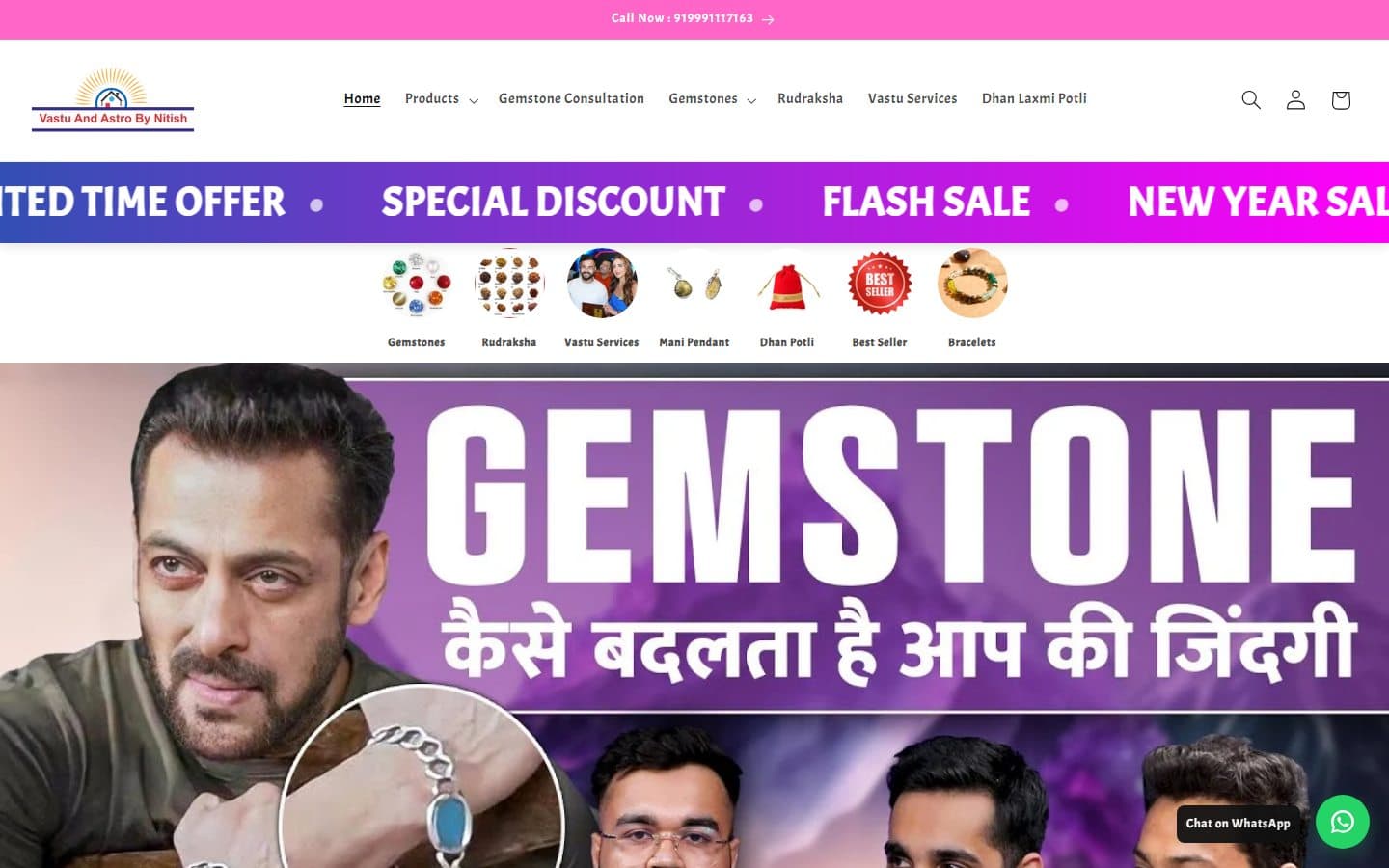
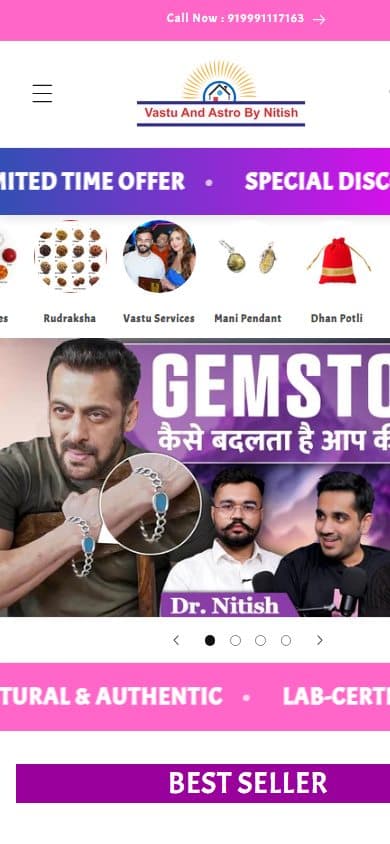
On a gemstone store, trust signals belong in the main path rather than the footer. A strip across the homepage states what matters before purchase: pure and natural gemstones, lab certification, free delivery across India and worldwide shipping. A call bar at the very top gives anyone who prefers to talk to a person a direct route. The consultation brand behind the store is introduced on the homepage too, so visitors know who they're buying from.
Consultation as part of the store
Not every visitor arrives knowing which stone to buy. The homepage includes a gemstone consultation form that asks for birth details and lifestyle, so the astrology team can recommend a stone. Visitors who aren't ready to choose still have a clear next step inside the store, instead of leaving to find advice elsewhere.
Payments, shipping and the rest of the setup
Behind the storefront, we set up payments and shipping for a business that delivers across India and abroad, connected the apps and integrations the store relies on, and worked on speed and search basics across the theme and catalogue. The catalogue is grouped into clear collections (Gemstones, Rudraksha, Mani Pendant and Dhan Laxmi Potli), which gives both shoppers and search engines a simple map of the store.
What to take from it
If you sell gemstones, Rudraksha or other spiritual products on Shopify:
- Name products the way your customers search, in both languages if they do.
- Keep one product per stone and use variants for origin and weight, rather than creating a page for every combination.
- Structure fixed items like Rudraksha through collections and clear titles instead.
- Put certification and delivery promises where buyers decide, not in the footer.
- Give undecided visitors a consultation route inside the store.
You can see the store at truegemskart.in (opens in a new tab), browse more of our astrology and gemstone work, or tell us about your store.